AC Joint Dislocation
What is an AC Joint Dislocation?
An AC joint dislocation is an injury to the acromioclavicular joint, which is located between the collarbone (clavicle) and the upper edge of the shoulder blade (acromion). This type of dislocation occurs mainly in falls, especially in sports that involve a high risk of falls and collisions, such as soccer, ice hockey, rugby, or cycling.
Classification
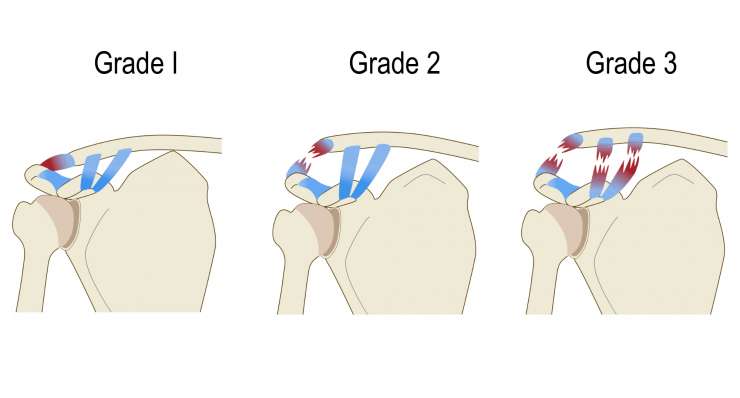
Injuries to the AC joint are usually classified into different grades according to the Rockwood classification system:
- Grade I: Strain of the ACG ligamentous apparatus, no dislocation
- Grade II: Partial rupture of the AC ligament and strain of the coracoclavicular joint.
- Grade III: Complete rupture of the acromioclavicular and coracoclavicular ligaments, resulting in visible dislocation.
- Higher grades (IV-VI): Severe injuries accompanied by further damage to soft tissues and other structures.
Medical explanation
Depending on the severity of the injury and the patient’s requirements, conservative or surgical treatment options should be considered. In cases of complete rupture of the stabilizing ligament apparatus with high-grade instability > type, surgical treatment is recommended for active and demanding patients. In this procedure, the clavicle is fixed to the coracoid process using a small pulley system with arthroscopic assistance (keyhole technique). In older, chronic injuries of the AC joint, it is necessary to combine this technique with a tendon graft in order to achieve sufficient biological stability. In this procedure, the gracilis tendon is removed from the thigh and then used to additionally secure the clavicle.
In-patient stay
The length of the hospital stay is approximately 2–3 days.
Follow-up treatment
During the first 6 weeks after surgery, the arm is immobilized in an abduction pillow. Subsequently, the range of motion is gradually increased under physiotherapeutic supervision. Movements above shoulder height are only possible after the sixth postoperative week.
Comprehensive information on other shoulder and elbow conditions and treatment options can be found in the complete range of treatments offered by Prof. Dr. med. Frank Martetschläger.