
Frozen-Shoulder
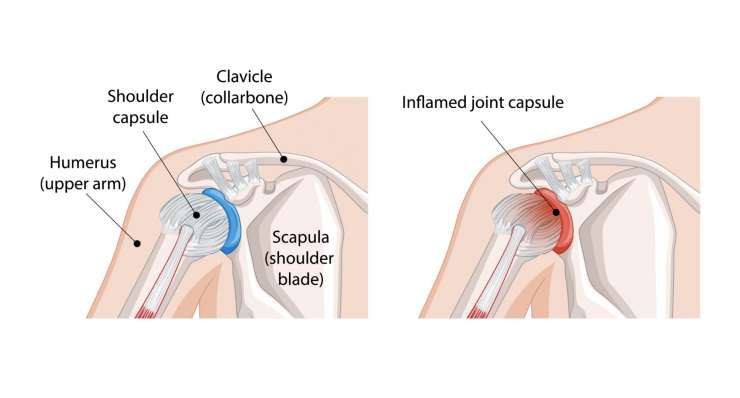
What is frozen shoulder?
Frozen shoulder (also known as adhesive capsulitis) is a condition that causes pain and stiffness in the shoulder joint. The exact cause of the condition is unknown, but it is believed to be caused by inflammation of the joint capsule.
Typical symptoms of frozen shoulder include pain, stiffness, and limited mobility in the shoulder area. These symptoms usually develop gradually and can last up to 2 years. The severity of symptoms varies from person to person.
If you suspect you have frozen shoulder, it is important to see a doctor for an accurate diagnosis and appropriate treatment. Early diagnosis and treatment can help ensure that the condition is treated more quickly and effectively.
Medical explanation
Frozen shoulder is a condition characterized by a global and significant restriction of active and passive mobility of the shoulder.
In addition to a primary form, the cause of which is unclear (idiopathic frozen shoulder), there are secondary forms that can occur, for example, after accidents or surgical procedures.
In all cases, the treatment of frozen shoulder is initially conservative. In addition to physical therapy and self-training (stretching program), cortisone preparations are used. Only in rare cases of persistent stiffness lasting more than several months may a surgical “release” of the joint (capsulotomy) be necessary.
Today, this arthrolysis is performed using keyhole surgery (arthroscopy). The thickened joint capsule is loosened and partially resected so that mobility is restored after the operation.
In-patient stay
2–3 days
Follow-up treatment
Immediately after the procedure, physiotherapy is necessary for approximately 4 weeks to prevent stiffness from returning. In addition, an electric motion splint is used to ensure continuous passive movement of the arm several times a day.
Comprehensive information on other shoulder and elbow conditions and treatment options can be found in the complete range of treatments offered by Prof. Dr. med. Frank Martetschläger.