Osteoarthritis of the shoulder (Ormarthrosis)
What is shoulder osteoarthritis or omarthrosis?
Omarthrosis, also known as shoulder osteoarthritis, is a degenerative disease of the shoulder joint. It occurs when the cartilage that protects the joint surfaces and allows them to glide smoothly wears away. This can lead to pain, stiffness, and limited mobility in the shoulder joint.
Common symptoms of shoulder osteoarthritis include:
1. Pain: Especially during movement or when putting weight on the shoulder.
2. Limited mobility: Difficulty raising or rotating the arm above the shoulder.
3. Stiffness: Especially after periods of rest.
4. Crunching or cracking: Audible noises may occur when moving the joint.
The causes of omarthrosis can be varied, including:
• Age-related wear and tear
• Injuries or overuse
• Genetic predisposition
• Inflammatory diseases
Medical explanation
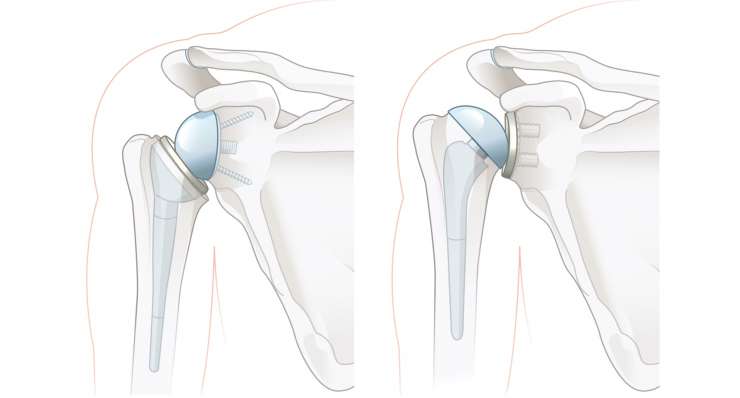
In cases of advanced osteoarthritis of the shoulder joint (omarthrosis), increasing functional deterioration, and/or uncontrollable pain, joint replacement with a shoulder prosthesis may be an option. Nowadays, both joint components (humeral head and glenoid cavity) are usually replaced in cases of omarthrosis. This procedure, which takes about an hour, involves the use of modern, small implants with so-called “shaftless humeral prostheses” and a thin polyethylene inlay as a socket replacement. The results published to date are excellent and confirm the long service life of the prostheses (80% over 20 years). Above all, these implants can quickly eliminate pain that has often been present for many years. In addition, function can be significantly improved so that patients no longer experience any significant limitations.
If, in addition to bone wear, there is chronic damage to the rotator cuff, a so-called inverse prosthesis is used, which can deliver excellent results in terms of pain reduction and function by changing the biomechanics of the shoulder joint.
Even in complex fractures, the implantation of anatomical or inverse prostheses may be necessary to restore shoulder function.
Inpatient stay
4-5 days
Follow-up treatment
The shoulder is immobilized in a brace for the first 4-6 weeks. Physical therapy begins in the first week after surgery with passive mobilization exercises and lymphatic drainage. Inpatient rehabilitation is most beneficial starting in the fourth week. Following rehabilitation, strengthening of the shoulder is continued as part of ongoing physical therapy. Postoperative physical therapy is performed for 4-6 months to achieve optimal results.
Umfassende Informationen zu weiteren Erkrankungen und Therapiemöglichkeiten von Schulter und Ellenbogen finden Sie im vollständigen Behandlungsspektrum von Prof. Dr. med. Frank Martetschläger.