Elbow osteoarthritis
What is elbow osteoarthritis?
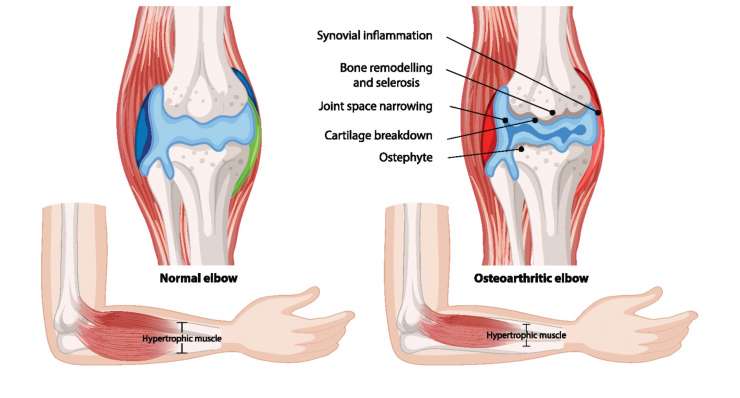
Elbow osteoarthritis is a degenerative disease caused by the breakdown of joint cartilage in the elbow joint. The joint cartilage in the elbow acts as a cushion and lubricant between the bones, allowing the elbow joint to function smoothly. When this cartilage breaks down, the bones in the elbow joint can rub against each other, causing pain, stiffness, and limited movement.
Elbow osteoarthritis can be caused by a number of factors, including injury, overuse, and degeneration over time. Symptoms of elbow osteoarthritis include pain, swelling, stiffness, and limited movement in the elbow area. These symptoms can worsen over time and affect quality of life.
Medical explanation
Wear and tear of the cartilage surfaces of the elbow joint can occur for no apparent reason (idiopathic osteoarthritis), due to chronic overuse (e.g., heavy lifting above the head or strenuous sports such as bodybuilding, javelin throwing, etc.), after accidents involving bone fractures, or after infections. After exhausting conservative therapy and if joint congruency is still sufficient, arthroscopic therapy may be indicated to eliminate pain and movement restrictions. Only in cases of severe joint deformities may open surgery with prosthesis implantation be necessary.
Technique
In arthroscopic arthrolysis, the joint is mobilized and bony growths (osteophytes) that interfere with joint mechanics are removed. In addition, the inflamed and thickened joint capsule is opened and partially resected. Cartilage damage can be smoothed and loose bodies removed. This usually results in improved mobility and reduced pain.
In severe forms of the disease, an elbow prosthesis may become necessary over time. As with other joints, various partial or total prostheses are available.
In-patient stay
2-3 days
Follow-up treatment
Temporary immobilization in an orthosis is required until the wound has healed. However, functional follow-up treatment with physical therapy begins immediately after surgery in order to maintain the mobility that has been gained. This lasts approximately 4-6 months until a satisfactory result can be achieved.
Comprehensive information on other shoulder and elbow conditions and treatment options can be found in the complete range of treatments offered by Prof. Dr. med. Frank Martetschläger.