Epicondylitis Golfer’s elbow or tennis elbow
What is epicondylitis?
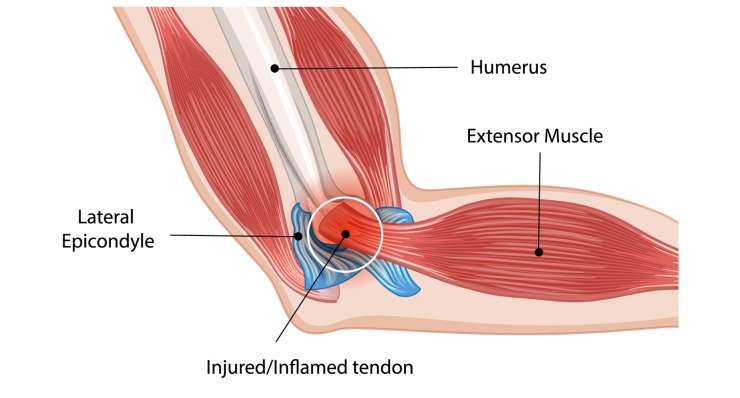
Epicondylitis, also known as tennis elbow or golfer’s elbow, is a condition characterized by pain on the outside or inside of the elbow (epicondyle). It often occurs due to overuse or repetitive strain on the flexor or extensor tendons of the forearm.
Symptoms of epicondylitis can include pain, stiffness, swelling, and tenderness in the elbow area. The pain can extend from the crook of the elbow to the wrist and be aggravated by certain movements, such as grasping or lifting objects.
Medical explanation
Epicondylitis is a chronic overuse injury of the tendon attachments on the outer (tennis elbow) or inner (golfer’s elbow) epicondyle of the elbow. In addition to inflammation and swelling of the tendon attachment (enthesopathy), this can lead to various degrees of tearing in the tendon plate. The severity of the tendon damage determines the prognosis and treatment approach. Therefore, MRI imaging should be performed if symptoms persist.
Conservative treatment
The primary treatment for epicondylitis is usually conservative and is promising in most cases. Local measures such as friction massage, iontophoresis, and careful stretching and strengthening of the affected muscles after pain relief provide relief from symptoms. Rest is important during this phase. Shock wave therapy and treatment with the patient’s own blood (PRP) are also important components of conservative therapy. Approximately 90% of patients can be successfully treated with these methods.
Surgical treatment
If conservative treatment is unsuccessful and there is damage to the tendon plate, surgery is indicated.
Our technique
After diagnostic arthroscopy, the diseased portion of the extensor carpi radialis brevis (ECRB) tendon is removed through a small incision in the skin and the bone in the epicondyle area is partially opened. The tendons are then reattached to the bone using small bone anchors. This allows the tendon tissue on the epicondyle to heal. A similar procedure is also possible for the rarer golfer’s elbow.
In-patient stay
2-3 days
Follow-up treatment
Follow-up treatment involves wearing a forearm splint for 6 weeks to prevent the reconstructed tendon attachments from being overloaded. Immediately after surgery, careful follow-up treatment begins under the guidance of a physiotherapist according to a schedule developed by us. Depending on the type of work, patients can return to their jobs after approximately 8 weeks. Strenuous activities or sports should not be resumed until at least 3 months after the procedure.
Comprehensive information on other shoulder and elbow conditions and treatment options can be found in the complete range of treatments offered by Prof. Dr. med. Frank Martetschläger.