
AC joint arthritis
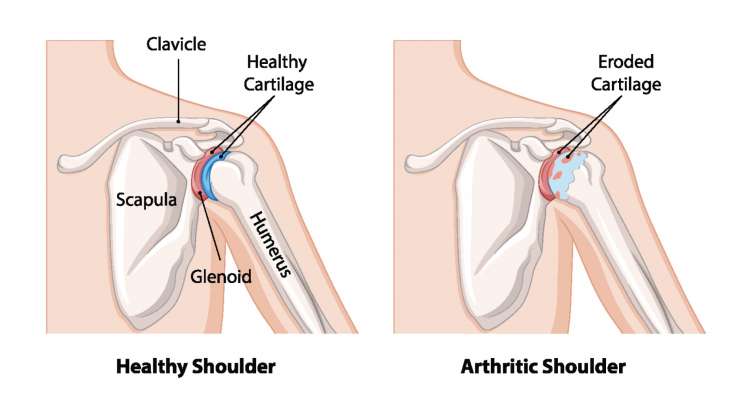
What is osteoarthritis of the acromioclavicular joint (ACJ)?
Osteoarthritis of the acromioclavicular joint (ACJ) is a condition in which the cartilage in the joint between the shoulder roof (acromion) and the collarbone (clavicle) is worn or damaged. This type of osteoarthritis often occurs in older people, but can also be caused by overuse or injury to the joint.
Typical symptoms of ACG osteoarthritis include pain, sometimes stiffness, and limited mobility in the shoulder area. In some cases, swelling or crunching in the affected joint may also occur.
It is important to see a doctor if ACG osteoarthritis is suspected in order to obtain an accurate diagnosis and appropriate treatment.
Medical explanation
Osteoarthritis of the ACJ causes painful contact between the two joint partners (clavicle and acromion) and chronic inflammation due to the lack of cartilage. If conservative options (physical therapy, cortisone or hyaluronic acid injections) have been exhausted, resection (grinding down) of the two bones with widening of the joint space can be performed, which allows the inflammation to heal.
In-patient stay
2 Days
Follow-up treatment
Immediately after surgery, the arm can be moved within a pain-free range during physical therapy, which is increased over time and eventually transitions into a strengthening program.
A return to work is usually possible after 2–4 weeks. For patients who are physically active or who primarily perform overhead work, the rehabilitation phase is extended to approximately 6–12 weeks.
Comprehensive information on other shoulder and elbow conditions and treatment options can be found in the complete range of treatments offered by Prof. Dr. med. Frank Martetschläger.