
Bursitis of the shoulder
What is bursitis?
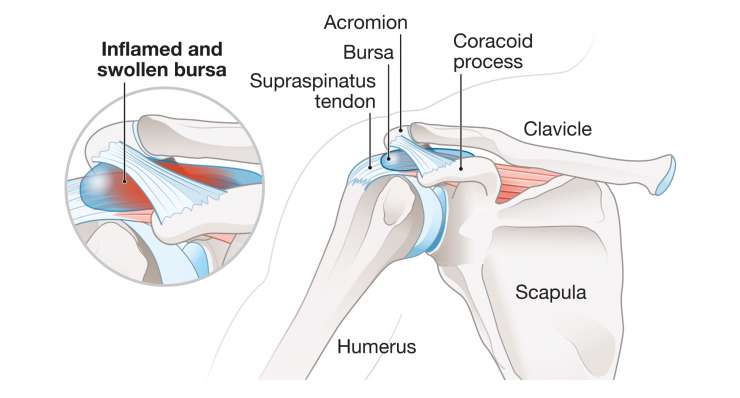
Bursitis of the shoulder occurs when the bursa, which is located between bones and soft tissues such as tendons and muscles, becomes inflamed. This inflammation can be caused by overuse, injury, or infection. Typical symptoms of bursitis of the shoulder include pain, swelling, redness, and limited movement in the shoulder area. In some cases, the inflammation can heal on its own, while in others, treatment may be necessary to relieve pain and restore mobility to the shoulder.
Medical explanation
There are numerous bursae in the shoulder joint area, which can cause pain and negatively affect shoulder function when inflamed (bursitis). Bursitis is always treated conservatively at first, primarily with anti-inflammatory medication. Only in chronic cases of recurrent bursitis may arthroscopic removal of the bursa tissue be necessary. In cases of chronic bursitis, additional pathologies such as impingement syndrome should always be ruled out.
In-patient stay
0-2 days
Follow-up treatment
This minor procedure does not require prolonged immobilization of the shoulder. Rest until pain subsides.
Comprehensive information on other shoulder and elbow conditions and treatment options can be found in the complete range of treatments offered by Prof. Dr. med. Frank Martetschläger.