
Fractured elbow
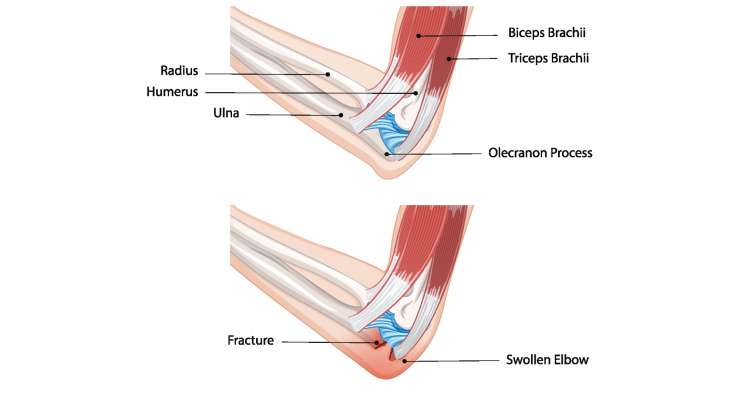
Elbow fracture in general
An elbow fracture occurs when one or more bones in the elbow area are injured. This can be caused by a fall, a blow, overuse, or other trauma. Symptoms of an elbow fracture may include pain, swelling, bruising, limited movement, and an audible crack or crunch in the affected area.
Medical explanation
Fractures (breaks) of the elbow can occur, especially as a result of falls. Both the upper arm bone (distal humerus) and the ulna or radius can be affected. Non-displaced fractures can often be treated conservatively. Depending on the severity and dislocation (displacement of the fracture), open osteosynthesis procedures with screws and plates must be performed on the ulna, radius, or lower upper arm (distal humerus). The coronoid process, which supports stability in extension, is of particular importance here. The radial head may also be so severely injured that reconstruction is not possible and it must be removed. In these cases, the radial head can be replaced with a radial head prosthesis to restore the stability and function of the elbow.
In-patient stay
2-3 days
Follow-up treatment
As a rule, an elbow brace with limited range of motion must be worn for 6–8 weeks. During this time, the joint is slowly mobilized under the guidance of a physical therapist. Patients can return to light physical work after 4 weeks and to heavy work after 3 months at the earliest. Sports are not permitted until after 4–6 months.
Comprehensive information on other shoulder and elbow conditions and treatment options can be found in the complete range of treatments offered by Prof. Dr. med. Frank Martetschläger.